

Root canals in Mooresville — gentle, modern endodontics.
Root canal therapy planned with 3D imaging and completed with modern, comfortable technique — most single-canal cases finish in one visit.
What to expect from us
A root canal has one of the worst reputations in dentistry, and it is almost entirely undeserved. With modern instruments, better anesthesia, and 3D imaging that shows the internal anatomy of the tooth before we start, a root canal today is much closer in experience to a filling than to the horror stories from decades past. Most patients report that the appointment was comfortable and that the biggest surprise was how quickly the pain that brought them in disappeared.
What a root canal actually does is remove the infected or inflamed nerve tissue from inside a tooth, clean and shape the canals, and seal them so the tooth can stay in place. The alternative — losing the tooth — is a much bigger deal. Keeping your natural tooth root supports the surrounding bone, maintains your bite, and typically costs less over a lifetime than replacing the tooth with an implant or bridge.
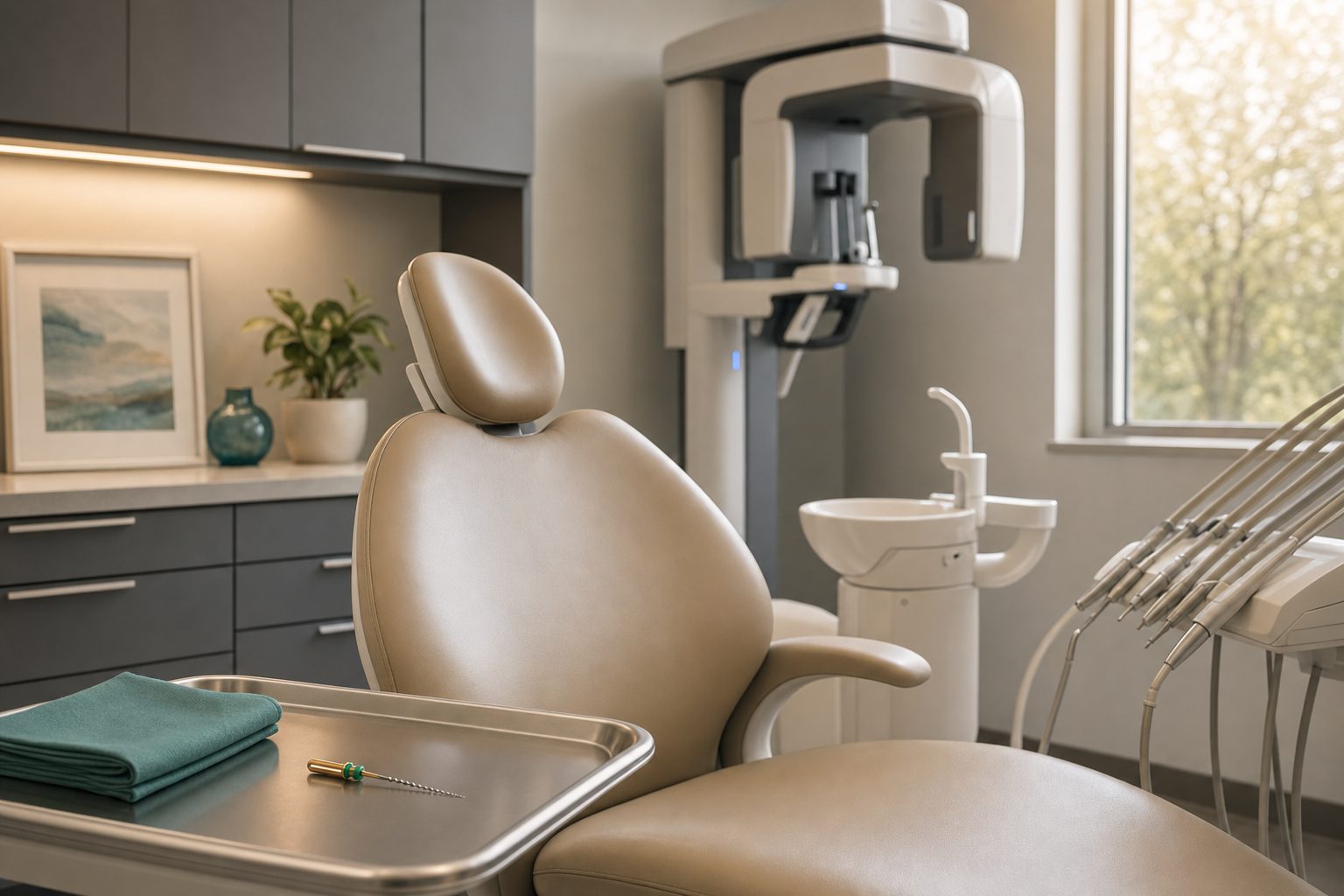
In our Mooresville office we take a CBCT 3D scan before any root canal so we can see the number and shape of the canals ahead of time. That planning is what separates a smooth, single-visit case from an unpredictable one. Most single-canal front teeth finish in one appointment; multi-canal molars sometimes take two.
How we approach the work
Diagnosis & 3D scan
We identify the affected tooth with a focused clinical exam and confirm with a digital x-ray and, when helpful, a CBCT 3D scan showing the canal anatomy.
Anesthesia & isolation
Local anesthesia — we do not begin until you are fully numb. A small rubber dam isolates the tooth so the treatment area stays clean and dry throughout.
Canal cleaning & shaping
Using fine, flexible files, we remove infected nerve tissue and shape the canals for a precise seal. This is the longest part of the visit and is completely painless once you are numb.
Sealing
The cleaned canals are sealed with a biocompatible material that prevents re-infection. A temporary filling closes the tooth until the final restoration is placed.
Final crown
Most root-canal-treated back teeth need a crown afterward to protect them from fracture. We plan that step at the same visit and typically place the crown two to four weeks later.
Questions we hear most often.
Does a root canal hurt?
The procedure itself is comfortable — modern anesthesia works well and we do not begin until you are fully numb. What most patients describe as painful is the toothache that led them in. That pain is usually gone within a day or two after the root canal is completed.
How long does a root canal take?
Most single-canal front teeth are done in a single visit of about an hour. Multi-canal molars sometimes take two visits, especially if there is significant infection to resolve first. We give you a realistic estimate at the appointment.
Do I need a crown after a root canal?
Almost always for back teeth — chewing forces on a root-canal-treated molar are high enough that the tooth can fracture without full-coverage protection. Front teeth sometimes need only a smaller restoration. We discuss what your specific tooth needs before we begin.
How long does a root canal last?
A well-performed root canal with a properly placed crown often lasts a lifetime. Failure rates are low with modern technique. Regular checkups let us catch any changes early.
Are there alternatives to a root canal?
The main alternative is extraction, followed by an implant, bridge, or leaving the space. Saving your natural tooth is almost always the better long-term choice when it is feasible — natural teeth outperform any replacement over time.
What if my tooth still hurts after the root canal?
Mild tenderness for a few days is normal — the tissues around the tooth need time to settle. Persistent pain beyond a week is uncommon and worth a call. We follow up with every root canal patient to make sure healing is going well.